Thursday, December 11, 2025

Good analysis of the problem with confounding in human genetic studies

This article highlights some of the issues that confound genetic studies, 

“The scientific literature has seen a resurgence of interest in genetic influences on human behavior and socioeconomic outcomes. Such studies face the central difficulty of distinguishing possible causal influences, in particular genetic and non-genetic ones. When confounding between possible influences is not rigorously addressed, it invites over- and misinterpretation of data. We illustrate the breadth of this problem through a discussion of the literature and a reanalysis of two examples.”


Saturday, July 19, 2025

The End of the Magic Gene Era

 Had some fun doing this piece on Substack:

https://open.substack.com/pub/unwashedgenes/p/the-end-of-the-magic-gene-era?r=awv8z&utm_medium=ios

We all grew up with some inflated expectations of what genes can do and it’s time to say farewell to this mythology.

Tuesday, January 28, 2025

"Income" GWAS

 Yes, it's a genetic study that tries to identify genes associated with income. Yes, these people take themselves seriously and also seem oblivious to the eugenic implications of such a study. Yes, 71 authors, all presumably with Ph.D.'s think the following is good science:

The meta-analysis across the income measures led to a substantial increase in power, which allowed us to identify 162 loci tagged by 207 lead SNPs (Fig. 2). Of these loci, 88 were newly identified compared with the previously published GWAS household income result conducted in the UKB. 

The previous GWAS found 149 loci (that's not really accurate, but by some statistical manipulation I believe also used in this this study, they went from 30 to 149). The math here leads to the fact that although 88 novel loci were identified, 75 that were previously cited in the last study are no longer significant. Thus, while tripling the dataset, they barely broke even. This is a good sign that they are looking at false positive results and that there aren't really any reliable genetic correlations for income. This is the same stunt that was pulled in the depression GWAS I discussed recently.  If you significantly increase data size, you should expect far more associations, even if these are false positives, so the fact that only a few more are seen and many are lost suggests that the new data did not have the same pop strat working for it (it was not UK Biobank data). This is really bad science. And the amount of time they spend pouring over these false positive results is embarrassing. 

Wednesday, January 15, 2025

Depression GWAS spinning unfortunate result.

 The latest depression GWAS has come out. I will focus on just one result from it:

The European-only analysis identified 622 SNPs in 570 regions with a net change in the full meta-analysis of 65 (142 regions gained, 77 regions became non-significant).

It boggles the mind that hundreds of authors see this and don't realize that they are dealing with spurious correlations. This is exactly what you would expect in such a scenario. You add more data to your original dataset, and you will get more correlations, but if you are losing 77 regions when you are still using the old data, which should bolster your previous results, you have a big problem. Moreover, making hay of an overall gain is a bit silly, when you increase the N. This is exactly what you would expect if the data was spurious to begin with. 

In addition, this should not be called a "meta-analysis," because there was never a GWAS done on new data before it was added to the old data. It is just an expansion of a known dataset, which is bad science for any number of reasons. About 10 years ago, the GWAS'ers stopped doing independent GWAS, because they were not getting any replications. Thus, they solved the replication crisis... They simply add to an ever-expanding, amorphous N by redoing the GWAS. Thus, you have no idea if a GWAS of the new data alone would have any replications from the previous (I'll take bets if anyone wants to challenge me).

It's also worth pointing out the misguided "enrichment analysis."

Our results confirm and extend previous findings showing the enrichment of expression signals in excitatory and inhibitory neurons.

Can you imagine discovering that 77 of the previous regions became non-significant, regions that you no doubt excitedly did an enrichment analysis on in the previous GWAS, and still thinking it's a good idea to do one for the new correlations?

Folks, you have a null result, again, and if you don't admit it, one can only speculate on whether this is a level of denial or dishonesty. I'm sorry but face the music. 

Tuesday, January 14, 2025

Eugenicists that don't use the Word

 This filth is from a well-respected scientist in the field of behavioral genetics. I won't bother naming him, but let's read between the lines of this, which has no business being published.

Polygenic genome editing in human embryos and germ cells is predicted to become feasible in the next three decades. Several recent books and academic papers have outlined the ethical concerns raised by germline genome editing and the opportunities that it may present. To date, no attempts have been made to predict the consequences of altering specific variants associated with polygenic diseases. In this Analysis, we show that polygenic genome editing could theoretically yield extreme reductions in disease susceptibility. 

When you have nothing, you can say "is predicted to become feasible in the next three decades." This is little more than a setup for the scam of embryo editing.  It's sad to me, that eugenic propaganda like this worms its way into being published in Nature as an "analysis." 


Wednesday, January 31, 2024

Why Rare Genetic Variant Correlations Will Not Shed Light on Schizophrenia


As I have discussed in a previous blog post, despite claims of strong heritability from twin studies and tepid results from genetic studies to date, there has been little success in elucidating causal genetic architecture for schizophrenia. A recent article comments on this issue (30 years too late).

The Human Genome Project was undertaken primarily to discover genetic causes and better treatments for human diseases. Schizophrenia was targeted since three of the project`s principal architects had a personal interest and also because, based on family, adoption, and twin studies, schizophrenia was widely believed to be a genetic disorder. Extensive studies using linkage analysis, candidate genes, genome wide association studies [GWAS], copy number variants, exome sequencing and other approaches have failed to identify causal genes. Instead, they identified almost 300 single nucleotide polymorphisms [SNPs] associated with altered risks of developing schizophrenia as well as some rare variants associated with increased risk in a small number of individuals. Risk genes play a role in the clinical expression of most diseases but do not cause the disease in the absence of other factors. Increasingly, observers question whether schizophrenia is strictly a genetic disorder.

An argument that is often made to counter this three decade failure, is that schizophrenia might be caused by rare genetic variants that, to date, have not been identified in genetic studies, but might be in the future. Bolstering this premise is the fact that individuals with rare genetic disorders such as 22q11.2 Deletion Syndrome and Fragile X Syndrome have a much higher prevalence for the diagnosis of schizophrenia. Such genetic disorders have been fairly easy to identify and most of the individuals have other issues such as intellectual disabilities and seizures. These disorders generally involve larger portions of DNA than a single genetic variant, however, so it is also difficult to identify which genes might be responsible. 

Whole exome sequencing (WES) is an advance on GWAS that allows one to locate very rare variants that would not otherwise be recognized and also confer a larger risk of schizophrenia. The idea here is that one could then see specifically what these genes do and determine how they might be causal for schizophrenia.
 This paper discusses some of these rare variants ( SETD1ACACNA1GCUL1GRIA3GRIN2AHERC1RB1CC1SP4TRIOXPO7, and AKAP11and their functions in an effort to understand how they might be implicated in schizophrenia. On the surface, this may seem like a useful approach for identifying genetic causes of schizophrenia. There are a couple of problems with this , however. The first is that these genes do not just increase the risk of schizophrenia. There is generally significant pathology that, in my view, disqualify them from considerations when we are talking about the bulk of individuals with schizophrenia who do not have such rare variants. Let’s look at one of the genes noted above. CACNA1G is involved in calcium channel gates in neurons. So it has a neurological mechanism, which might seem like it gives credence to the idea that is can be causal for schizophrenia. The problem here is the fine print:
 Along with being a schizophrenia risk gene, CACNA1G is also associated with the risk of severe intellectual or developmental disability.

In fact, all of the rare variants noted in the paper also confer risk for developmental and intellectual disabilities. If one had a gene that only conferred a risk for schizophrenia and nothing else, the case would be stronger. However, the fact that these patients generally have other developmental and intellectual disablities is not a coincidence. It speaks to the reality of clinical psychiatry and needs to be looked at in a broader social context.

Patients with intellectual disabilities are often put into the mental health system due to behavioral issues and other coping difficulties that anyone has witnessed. These issues will get them into difficulties both in the home with those involved in their care and other social environments. The hope is that some intervention, generally medications, will help keep them under control and out of troubles that might affect their ability to find basic living arrangements, hold jobs, etc. As a psychiatrist, there is no clinical justification for just keeping someone medicated without an appropriate diagnosis in the Diagnostic and Statistical Manual (DSM). The number of diagnoses one can give that would justify the kind of medications being considered in such a scenario, which would be sedative antipsychotic medications like Haldol or Olanzapine, or mood stabilizers like lithium and Depakote are few.

So we have a situation where the questions will be structured (consciously or unconsciously) to achieve the goal. “Billy, did the voices tell you to break the window?,’ “Jane, do you feel like people are making fun of you?,” “Mike just had a mood outburst,” etc. Soon you have a patient who hears voices, is  paranoid and has mood issues. Then you give a diagnosis of schizophrenia, or more often, schizoaffective disorder. The fact of the matter is that these “symptoms” are simply not the same as someone with the classic diagnosis of schizophrenia, who hears actual voices speaking to him as opposed to some impulse, who has a paranoid conspiracy brewing in his head related to the CIA or the Masons or the like rather than the very real concern of someone with a mental disability that people are making fun of them. Likewise, someone with classic manic symptoms where they are awake for a week straight, believing they are millionaires and secretly married to a celebrity, etc., is not like someone having a temper tantrum.

Semantically, they can both be said to meet the criteria for schizophrenia, but these are two very different things and speaks to the limitations of the DSM. Moreover, if you take ten rare genetic variants that correlate both to schizophrenia and a mental disability, common sense should tell you that the mental disability is what is being labeled schizophrenia and not that they have both a mental disability and schizophrenia. Since schizophrenia has very specific symptoms (auditory hallucinations, paranoid delusions, etc.), it makes no sense to assume that ten different variants with entirely different neurological mechanisms all happen to lead to schizophrenia. This is not logically coherent.

What these studies are really showing, in my opinion, is one of the dirty little secrets of psychiatry and society, more generally, where if individuals are not able to cope within the acceptable structured milieu, then it falls on chemical sedation, to get them in the necessary boxes.


Sunday, October 29, 2023

Is Behavioral Genetics a Null Field?

 On a whim, I signed up to present a poster at the The American Society of Human Genetics (ASHG) conference in DC. That, of course, required an actual article, so I wrote this up. It should be an easy read. It is written for a wider audience:

The Question That Must Be Asked: Is Behavioral Genetics a Null Field?


Sunday, June 25, 2023

Within-Family now Fading

Within-Family PGS was said to prove definitive causal SNP’s and even though they generally give 1 or 2% of the variance explained, this was being held onto as proof of something, as Harden stated in her book, The Genetic Lottery,   “... the heritability of educational attainment is still not zero.”  Now that is (not surprisingly) being called into question with this simulation study:

A model for co-occurrent assortative mating and vertical cultural transmission and its impact on measures of genetic associations.

The study notes that GWAS are still beset by confounding, noting:

“Furthermore, we show that such inflation remains even when applying within-family based estimates.”

For the past 3 decades, behavioral genetic studies have relied on the fact that their assertions take a few years to be disproven and, by the time that happens, they have new assertions - rinse and repeat. 


Wednesday, May 17, 2023

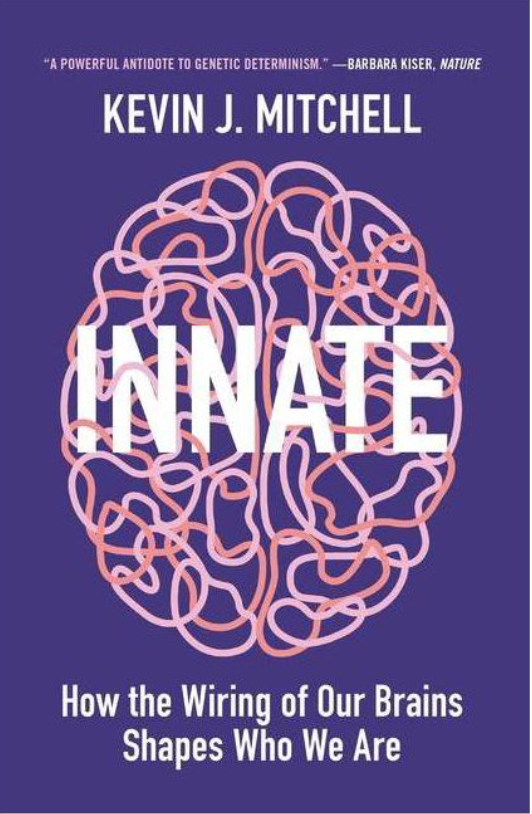
Review of “Innate,” by Kevin Mitchell


Innate,” by the neurogeneticist Kevin Mitchell, explores the case for a genetic and neurodevelopmental origin of individual differences in intelligence and other human character traits. As the title suggests, the book generally leans toward “nature” in the nature vs. nurture debate, and makes the assumption that “innate” implies a genetic origin, although with a more dynamic view of the path from gene to trait than one sees in Robert Plomin’s “Blueprint” or Katherine Paige Harden’s “Genetic Lottery” (links to my reviews of those books at the end of this review).

The question of the nature of individuals and how that nature arises has existed, in one form or another, for as long as human civilization, but took a specific turn in our own with the work of Charles Darwin or, more specifically, the work of his second cousin, Francis Galton, the eugenicist and polymath who applied Darwin’s evolutionary theories to human behavior and intelligence and actually coined the term “nature versus nurture.” 


Galton’s eugenic ideas have inspired quite a bit of misery and Mitchell rightly condemns these ideas. Nonetheless, he is often complimentary of Galton’s statistical  work related to trait heritability, which I find unfortunate. I don’t think one can simplistically separate this from Galton’s eugenic ideas, which were arguably the driving force behind his math, and which is still embraced by race-oriented “scientists” to this day. 


Pigeon-holing behavioral traits into mathematical boxes, so that traits like intelligence, extroversion and schizophrenia can be assessed in the same way we might assess traits like height, eye color, or other obvious physical features, or even milk production in cows is bizarre on its face and involves some unimaginative assumptions about the nature and complexity of human beings, while also ignoring ongoing philosophical debates and simplifies individual human nature down to an assumption that it must be related to differences in genetics and neurodevelopment. 


Mitchell uses the analogy of a robot being programmed, to explain his view of the mind, with  “computational algorithms of decision-making,” and  “neuromodulator circuits …tuned - they work differently in each of us, thus influencing the habitual behavior strategies we each tend to develop.”   Mitchell suggests that “brain circuits” develop with some variation in individuals that make “major contributions to our psychological traits.” None of this is demonstrable, and is the kind of theoretical understanding of the brain-as-computer you find in his field. Unfortunately, Mitchell largely sells it as a factual representation of the human mind, rather than his theoretical viewpoint, a recurring theme in this book.  I think he could use far more qualifiers when presenting his ideas.

Friday, March 17, 2023

“Geneticism”: The Making of a New ism

I cringed a bit when I first saw this paper:
Nurtured Genetics: Prenatal Testing and the Anchoring of Genetic Expectancies
Any time there is mention of applying polygenic scores, particularly for so-called “educational attainment,” it raises my concern. However, I think this paper makes an excellent point that I’d like to explore further, about the perception of a “magical” genetics, fostered by decades of dubious claims purporting to demonstrate a role for genes for traits such as intelligence, personality, and mental disorders. I, of course, challenge any such role and chalk most of the ever-changing genetic correlations noted in studies to population stratification related to class, race, geography and other such divisions of people. Even if I am completely correct about this, however, there is an unfortunate reality created by these continued pronouncements of a genetic basis for something like educational attainment, noted in the paper:

  1. Primacy Effect: Presenting polygenic scores for traits, as the first units of information about a child, will lead parents to assign undue weight to that genetic information.
  2. Anchoring and Adjustment Heuristic: Parents informed about a future child's genetic predispositions (before birth) will form "genetic expect-ancies" (i.e., expectations created on the basis of polygenic scores), and will be less amenable to updating those expectancies based on subsequent environmental information compared to those informed post-birth).
  3. Nurtured Genetics Effect: Parents will search to confirm or disconfirm their genetic expectancies and in doing so, they will be exposing their child to environments conducive to the actualization of their genetic expectancies.
Even if these polygenic scores are meaningless related to educational attainment (and, they are), they will still matter for educational attainment, because they will change the perception for individuals. This is not just for parents, but for the individual, who is now born with an expectation. If you don’t think you have the genes for getting a high level education, because you have been told this, then you are less likely to pursue higher education. If you don’t have the genes for “musical ability,” you might be less likely to pursue music, etc. So in, say, one or two generations, if these polygenic scores were widely used, you might essentially make the polygenic score valid, as people pursue what they are told by these scores to pursue and their parents guide them in that direction. 
I’ve pointed this out in the past related to psychiatric diagnoses, where it is often noted that a family history of a particular mental disorder will increase the likelihood that you will be diagnosed with that disorder. Well, sure, since psychiatrists are trained to give weight to family history when making a diagnosis, you would be more likely to get a particular diagnosis if your parent or sibling has that diagnosis than a person with the same symptoms who does not have a such a family history. So if you read that “studies show” that those with a family history of bipolar disorder are more likely to be diagnosed with bipolar disorder, it might take on a different meaning with this in mind.
Another concern would be if polygenic scores are accepted on an institutional level, where they are used to make decisions affecting the future of individuals. If this sounds like science fiction, Robert Plomin, a well known behavioral geneticist stated explicitly in his book, “Blueprint,” that, in the future, elite school selection should be based in part on “inherited DNA differences.” If such were the case, it would be a matter of time before people would take into consideration what DNA their potential spouse has and the likelihood that their children would have a high polygenic score for educational attainment.
In such a scenario, polygenic scores would reinforce classist and racist social structures, keeping those already more likely to get the benefit of a higher education locked in by their genetics, even if the genetic variants used to create a polygenic score have absolutely no real effect on a person’s ability to traverse higher education! This could create an extension of classism and racism, that one might call “geneticism,” that will be its own prejudice and compound other prejudices. Clearly, there is an incentive for those in a more privileged class to use polygenic scores to effectively help reinforce an aristocratic hierarchy and this is another example of the dangers of using polygenic scores for decisions relating to the future of individuals.


Tuesday, March 7, 2023

Study Shows That Genetically Identical Fish Can Have Lasting Behavioral Differences.

 This is an interesting study:

The Emergence and Development of Behavioral Individuality in Clonal Fish

 The study monitored the “behavior” of a specific clonal strain of a species of fish (Poecilia Formosa). They noted that, despite the fish all being genetically identical, they exhibited varying behavior (swimming speed, how active, etc.). 

Our findings show that substantial behavioral individuality is already present at the very first day of life after birth among genetically identical individuals, suggesting that pre-birth processes like pre-birth developmental stochasticity and/or maternal effects might play considerably more important roles in shaping behavioral individuality than commonly thought.

This variability only strengthened as the fish got older. From my perspective, the interesting thing is the extent to which this suggests behavior is not that defined by genetics, at least in fish. One might assume that this would extend to the more complex behaviors of humans, though, which begs the question as to how much influence genetic variants can have in human behavior for even one generation, much less be identified in genetically different individuals who merely share some common genetic variants. The math just doesn’t seem to be there for high heritability, if there is any heritability at all.

It would be interesting to see this experiment repeated with genetically varied fish and see if there is any more variation in their behavior (assuming they are physically the same size and shape, etc.) than you see with genetically identical fish. My guess is that it would be minimal. 

Monday, February 27, 2023

Within Family Studies not Finding What They are Claiming

 More evidence that genome wide association studies (GWAS) find nothing but pop strat and noise. This study debunks the idea that you can look exclusively at family members to assess differences in genetic variation and definitively validate genetic correlations:

Interpreting population and family-based genome-wide association studies in the presence of confounding

The idea is that, since we are looking at family members (brothers, parent/sibling, etc.) and determining whether the relatives with a particular trait have higher polygenic scores (have more of the genetic variants correlated to a trait) versus those who do not have the trait, that will demonstrate that these genetic variations contribute to the person having the trait. 

One recent example is the so-called “Educational Attainment” GWAS. Before doing a within family analysis, they claimed that they found genetic variants that explained 13% of the genetic variance. When they did a within family analysis, this figure dropped down to 2 to 3% (the study does not provide an actual figure and the authors did not provide one at my request. This is an estimate I received from an expert in the field). Rather than focusing on the fact that the 13%  figure was demonstrably bloated, they pivoted to claiming that the 2 to 3% figure proved there was at least “some” genetic contribution to educational attainment. I think that this study suggests, though, that even this small percentage is possibly little more than pop strat and noise. 

After years of these studies, they have nothing at all to show for it. They nonetheless write books and advance careers making these spurious claims. The idea that “educational attainment” is genetic is harmful. It is irresponsible to continue making these claims and it is time to address the likelihood that “behavioral” traits do not have a significant genetic component.


Monday, June 6, 2022

The Use of Genetic Research to Justify Racism

 This is a piece I wrote about the Buffalo mass shooter, who justified his actions in part by citing genetic studies. Some of these were obvious race science, but I am more focused on the “educational attainment” genetic study he cites, that is considered respectable by the scientific community and was heavily cited by Kathryn Paige Harden in her “Genetic Lottery” book (my review of that book, here).

Saturday, April 30, 2022

Dog Breed Myths

“Thus, dog breed is generally a poor predictor of individual behavior and should not be used to inform decisions relating to selection of a pet dog.”

I generally find it annoying that, failing any real evidence of genetic causes of human behavior, people (including behavioral genetic scientists), point to dog breeds to demonstrate some validity to the concept, since dog “behavior” is even more subjective than for humans and is based on the dog’s owner’s opinions, and people can be influenced by breed perceptions. Moreover, the variability in size and build of dogs could have an influence on the behavior. 

It appears, however, according to this study, that a lot of claimed breed characteristics are myths. As anyone who has owned more than one dog of the same breed can attest, dogs, like humans, have their own personalities. 

Thursday, February 17, 2022

Another ADHD "Meta-Analysis" Makes Genetic Claims for the Disorder, But Shows the Opposite.

 The latest ADHD GWAS is available in pre-print:

Genome-wide analyses of ADHD identify 27 risk loci, refine the genetic architecture and implicate several cognitive domains

It is now formulaic to perform a GWAS "meta-analysis," rather than independently examining a new dataset. I put meta-analysis in quotes, because this is not really even what we have, since this new data which makes up half the data in the study has not been in a previous study. As I have noted repeatedly, this is problematic and I will touch on why in this critique. Let's get to the claims. 

 The meta-analysis identified 32 lead variants (r2 < 0.1) located in 27 genome-wide significant loci (Figure 1; Table 1, locus plots in Supplementary Data 1), including 21 novel loci. No statistically significant heterogeneity was observed between cohorts 

The first question you might ask is why these 21 novel loci were not noted in the previous GWAS for ADHD? The argument is that when you increase the number of cases, working with a higher N, you are more likely to pick up smaller correlations. The problem with that argument can be seen by the fact that there were 12 loci found significant previously and now only 6 of them are still significant. If we were talking about two entirely different studies, where the larger one picked up 6 out of 12 loci from the previous study, you might make some claims of a modest success and the authors seem to imply exactly this: 

Six of the previously identified 12 loci in the ADHD2019 study14 were significant in the present study (Table 1), and the remaining six loci demonstrated P-values < 8x10⁻⁴ 

The problem here is that the data from the ADHD2919 study referenced above WAS INCLUDED IN THE CURRENT STUDY. It makes up about half the data, in fact. Thus we are not talking about independent replication, which apparently was not even attempted (or at least no such results were included). If you make the argument that increasing the case numbers identifies more significant loci, then why wouldn't you expect the previous 12 loci to be confirmed? Without even considering population stratification issues, if you have 12 loci with low p values for correlation, you are bolstering the dataset. The fact that half the loci did not retain significance should sound alarm bells. 

Similarly, it is assumed that increasing case size would increase the identified h2 heritability related to genes. Let's see how that turns out:

The SNP heritability (h2 SNP) was estimated to 0.14 (s.e. = 0.01), which is lower than the previously reported h2 SNP of 0.2214. The h2 SNP for iPSYCH (h2 SNP = 0.23; s.e. = 0.01) was in line with the previous finding, but lower h2 SNP was observed for PGC (h2 SNP = 0.12; s.e. = 0.03) and deCODE (h2 SNP = 0.081; s.e. = 0.014). Between-cohort heterogeneity in h2 SNP is not unusual and has been observed for other disorders like e.g. MDD <Major Depressive Disorder>.

One interpretation of this finding, apparently not occurring to the authors, is that the positive findings they have are little more than population stratification, and even in relatively homogenous (white European) cohorts, such pop strat loses its strength from one study to the next. It is a bit amusing that the counter to this is that it was observed in MDD, circularly assuming that both are valid. In other words, getting contradictory results for other diagnoses validates that it should be expected for ADHD. They, in fact, double down on this dubious argument:

The observation that previously identified loci may not reach genome-wide significance in a subsequent larger GWAS, has also been seen for other psychiatric disorders, e.g. bipolar disorder, where eight out of 19 loci were significant in a subsequent larger study.

It's hard not to laugh, and I'll point out that the "larger" GWAS for other disorders like bipolar disorder also had this contradiction even though they were also using data from the studies that first "discovered" the loci.  

Much of the rest of the study involved "enrichment," statistics, making the argument that cognitive related genes are more common among the significant loci. This is impossible to critique without access to the methods used. However, I would ask the authors to consider whether the 6 loci that did not remain significant were claimed to be enriched in previous studies? Is this an indication for the loci being valid, or is this an indication that these enrichment statistics are misguided?




Saturday, February 5, 2022

Genetic Studies of Schizophrenia to Date Fail to Find Anything of Substance

 This Study compiles the results of genetic studies (GWAS) for Schizophrenia to date:

What genes are differentially expressed in individuals with schizophrenia? A systematic review (Merikangas et al.)

Despite the authors' claim that the review is "promising," it provides nothing of substance. Below are some excerpts. 

First they review the problem to date:

Though there have been more than 300 studies of gene expression in schizophrenia over the past 15 years, none of the studies have yielded consistent evidence for specific genes that contribute to schizophrenia risk. The aim of this work is to conduct a systematic review and synthesis of case–control studies of genome-wide gene expression in schizophrenia. 

There have been more than three hundred studies of gene expression in schizophrenia over the past 15 years, but to date there is no consistent evidence for clearly implicated genes from these findings.

Here are some of their findings: 

Of the top 160 genes, the majority of replicated findings were inconsistent in their reported direction of effect (n = 108 genes). This finding did not appear to follow a pattern based on the origin tissue or the expression measurement technology employed 

The GBP2 gene, which appeared in five studies, was reported to be upregulated in individuals with schizophrenia in four studies and downregulated in one. Of the 21 genes reported as significant by four studies, 19 had inconsistent directions of effect. Of the 138 genes that appeared in three studies, 88 had the inconsistent direction of effect.

In other words, even when they purported to find the same gene in more than one study, it is correlated higher or lower for that gene from one study to the next, suggesting random false positive findings. 

Of the 160 genes reported as significantly differentially expressed in three or more studies, none showed associations with rare variants in the SCHEMA data after correction for multiple comparisons. 


This review summarizes the literature on gene expression in schizophrenia and demonstrates the surprisingly small overlap in the genes reported across studies. Only 26 studies met our a priori inclusion criteria and were described here. The results of this review were unexpected, in that few genes were found in more than three studies, and the reported direction of effect was so variable. It was hoped that gene expression would help to explain the large number of genome-wide associated variants that are not found in genes and are theorized to be regulatory. With some exceptions described below, gene expression does not implicate the same genes that have been found by GWAS, CNV studies, or exome studies via SCHEMA.


As we would expect, the genes found in this study appear to be differentially expressed in the brain when compared to other body tissues. However, there are some unexpected results; notably, differential expression in the pancreas, subcutaneous adipose tissue, whole blood, liver, and lymphocytes. It is possible that the differential expression in blood, brain, and lymphocytes is due in some part to these being the tissues assayed in the transcriptome abundance studies summarized here.


Thursday, December 9, 2021

New Video on Psychiatric Twin Studies

 A second video with Jay Joseph, this time talking about his specialty: twin studies. We focus specifically on psychiatric twin studies and discuss heritability claims. 


Wednesday, October 20, 2021

New YouTube Channel with Jay Joseph

 Psychologist, author and twin study skeptic Jay Joseph and I are collaborating on a YouTube channel called “Genetic Illusions.” Our first video challenges claims of a genetic mechanism for schizophrenia.


Saturday, September 11, 2021

Polygenic Risk Score is Absolutely Useless for Predicting Schizophrenia

 This Study  used the best polygenic risk score (PRS) to try and predict schizophrenia for a large group of individuals. Let's just cut to the chase, here:

For all outcomes investigated, the SCZ PRS did not improve the performance of predictive models, an observation that was generally robust to divergent case ascertainment strategies and the ancestral background of the study participants.

 At this point, it is denial to believe that PRS is ever going to have any real use for schizophrenia or other classified mental disorders. The reason for this is that these traits are not related to genetic variants. The entire premise of PRS is a flawed idea for behavioral genetics. Let me add that if you let your diagnosis be influenced by polygenic scores (which you shouldn't based on this study, but you know how these go), then you will create a self-fulfilling prophecy of PRS predicting schizophrenia. 

Monday, September 6, 2021

My Review of Kathryn Paige Harden's "The Genetic Lottery "


Every few years, the scant evidence for genetic determinism will be promoted and sold in book form. In 2018, it was Robert Plomin’s “Blueprint.”  The latest comes from psychologist and behavior geneticist, Kathryn Paige Harden, with her new book: “The Genetic Lottery - Why DNA Matters for Social Equality.” From the title alone, one can see that she will be selling a version of genetic determinism with a heart. To her credit, in contrast to Plomin, Harden addresses the ramifications of behavioral genetics’ historical association with eugenics in some detail, but her book is otherwise similar in substance to Blueprint (despite her own negative review of Blueprint). Both books spin polygenic scores as a savior for the failing field of behavioral genetics, with the dubious suggestion that these results are “causal.”  

In Plomin’s case, his fanaticism for polygenic scores could be written off as wishful thinking for a man at the end of his career, touting a perceived future of ever improving polygenic prediction. Harden, on the other hand, has had a few years to see the hype dwindle, with study after study noting the limitations of such scores. 


Harden’s primary focus is what is referred to as “educational attainment,” basically a simple measurement of how far someone goes in school, viewing it as a trait with some genetic basis. In truth, this “trait” is a bit of subterfuge, serving as a proxy for intelligence, while avoiding some of the controversy surrounding genetic studies of IQ (and their association with books like Charles Murray’s, “The Bell Curve”). 


Harden's writing style at times involves condescending oversimplification through analogy: “If a gene is a recipe, then your genome -  all the DNA contained in all of your cells - is a large collection of recipes, an enormous cookbook.” This quaint presentation of the subject suggests that she is targeting a lay audience, but I question whether those not already familiar with this kind of research would find this book engaging and these analogies do not appear to clarify the subject in a more comprehensible manner.


Books of this nature generally have the same two issues to tackle and Harden’s is no exception. The first is to sell the scientific evidence related to claims of a genetic basis for educational attainment and other behavioral traits. The second relates to the ethical and practical implications of this research. I will address her treatment of both issues here, beginning with the latter.